
Sustainability & Sound
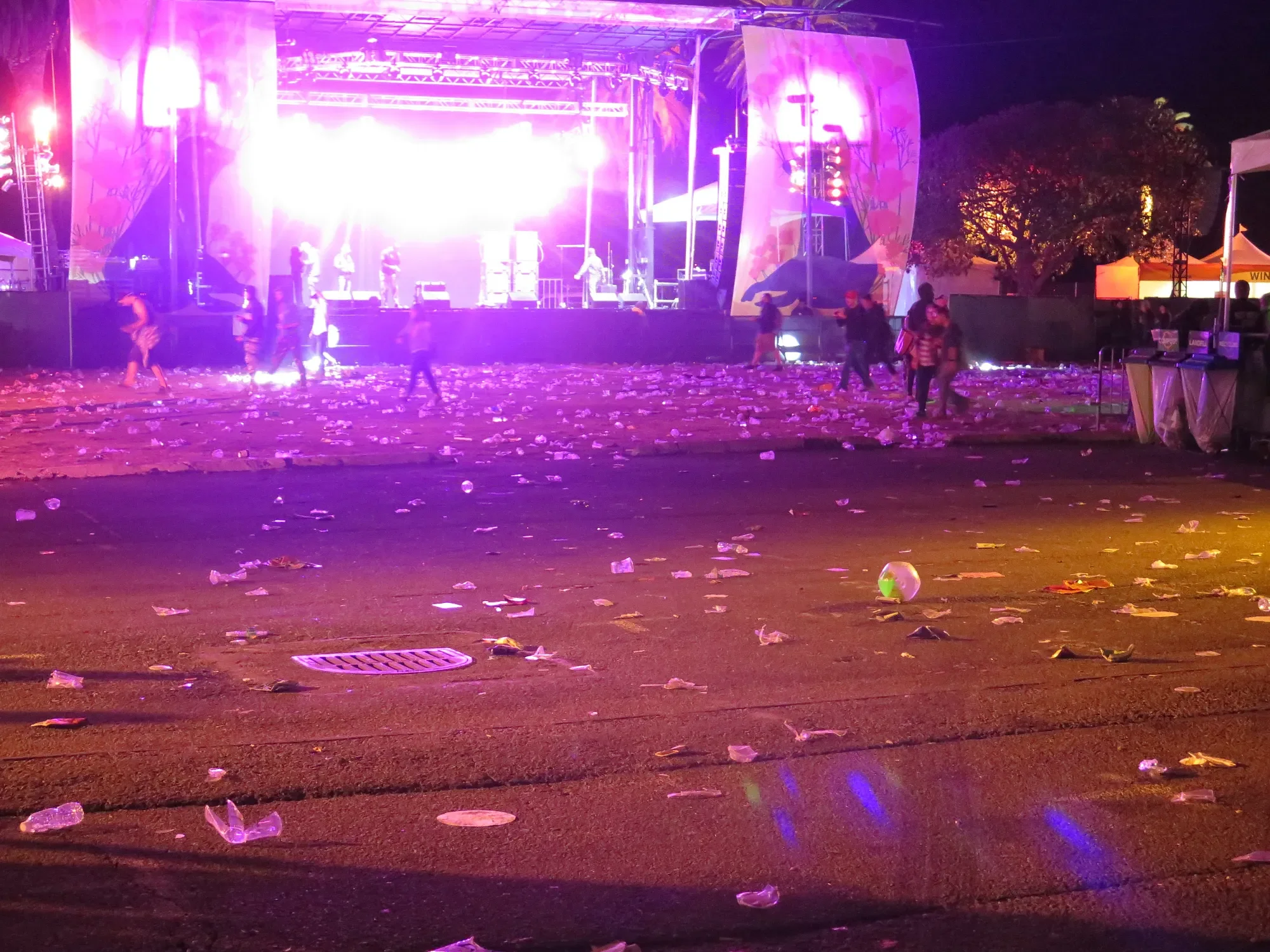
The main stage at Treasure Island Music festival 2015
Everyone has an epic, or not-so-epic story to tell when they go to a concert, especially a music festival. I recently went to Treasure Island Music Festival, my first ever music festival, and it exceeded my expectations. I was like a kid in a candy store, but instead of lemon heads and bubble gum there were djs and bands, cool installations that lit up at night, and pop up stands where you could create awesome gear for yourself or at home. I ended up leaving that day discovering new bands like Gorgan City, a flower crown, and a bottle opener for my apartment.
For others, they might have experienced some random sights they still can’t believe, like that one time my friend saw giraffe in the crowd. Of course it was a person in a suit but you don’t see that everyday on the street, so why would you see that at a concert, right? Or my other friend had this random girl who joined her group because she one, was beyond drunk, and two, wanted to leave but her cheating boyfriend went to go hit on another girl he met at the festival and she didn’t want to leave him behind. I know, I face palmed when she told me that but alcohol does crazy things to you.
Of course the older generations judge the new generation by saying, “It’s not about the music anymore.” Which to a certain extent I agree because it’s much more than just music; it’s become a culture. Coachella has become a runway for celebrities and festivalgoers. Electric Daisy Carnival, EDC, the biggest rave scene in the United States has a ritual for newcomers to receive “kandi,” beaded bracelets made at home or bought at festivals by the festivalgoers, from veterans to remember their first time. From popping cherries to popping bottles, the music scene has always been an outlet for self-expression, acceptance, rebellion, anarchy and just full-out tomfoolery.
But in these retreats of music, where does the environment fit into that? Some music festivals have already thought about this question, but to what extent do they execute these ideals in motion? Do people even care? Surprisingly they do! Awareness is a key factor. Educating people that they are a part of the problem is the first way to start, beyond just labeling trash, compost and recycling trashcans.
From the artist and the roadies who set up the equipment to the volunteer workers who are there hours after the venue closes cleaning up trash, everyone is affecting the environment. As for my project, I decided to focus on the festivalgoers. I wanted to explore how I can incentivize and motivate them to throw away trash instead of trashing the festival grounds.
My three concepts are for the extreme user in this system — the drunken festivalgoer. The main source of revenue at music festivals, besides the ticket itself, is the alcohol. There’s no surprise that it’s the main source of trash too. You can go to the sponsors and ask them to provide non-single use plastic cups at the venue, but that’s more money out of their pocket.
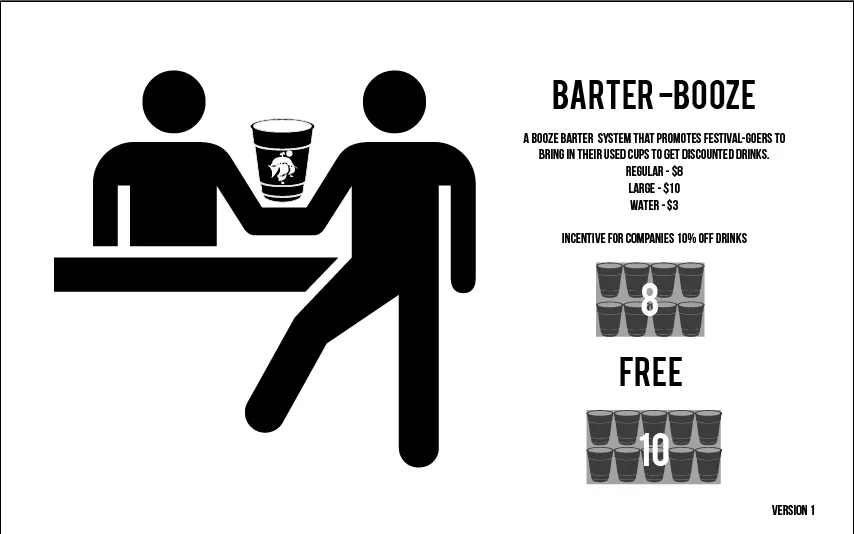
So instead, why not create a barter system that provides discounts to the festivalgoers and incentivizes them to pick up trash? Vendors can increase the price of drinks for a potential ten percent discount or less of a percentage to the venue or promoter. This also puts less of a burden on volunteers who clean up after the festival. Another concept on the trashcans at the venue is to create a visual display that creates positive reinforcement or negative reinforcement so they can see their impact on the venue in real time. The last concept is connecting a wearable with the festival wristband that gives the festivalgoer tokens that they can use for discounts for their drinks. This is the digital version of concept one. The wearable connects with the trashcan, keeps track of how many cups they disposed of into the trashcan, and then rewards them with tokens back for discounts on drinks.
Now that you’ve stuck through this with me, to the very end, I just want to bring awareness to the issues of how music festivals have a negative impact on the environment. Music is a part of us, it’s a culture, and it’s just an amazing thing that we all can connect too. But that doesn’t mean in the process of celebration we should destroy and neglect the land to promote this culture. Let’s change that, and the first step is to change us.
